
Bard
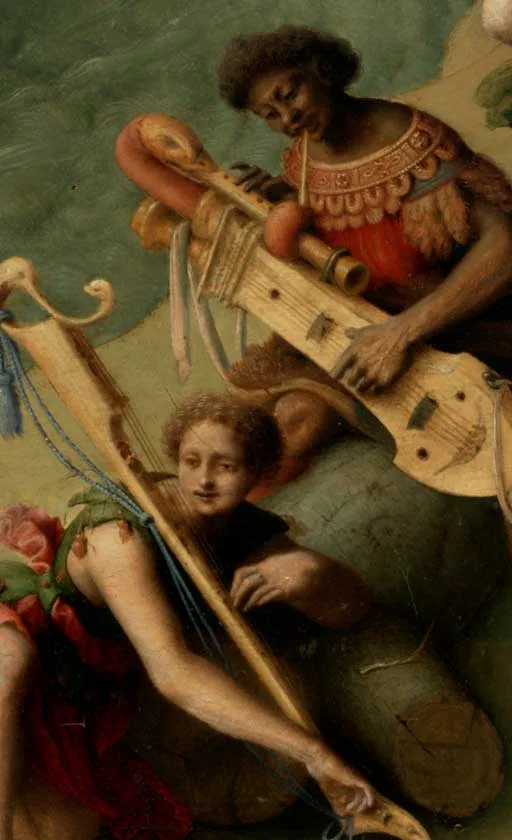
The Feywild is a world of whimsical spirits, and you are among their favorite artists. The more passionately you perform, the more magic is showered upon you. If a Cleric has a god and a Warlock has a patron, a Bard has an otherworldly fandom.
Bardic Inspiration
You can supernaturally inspire others through words, music, or dance. This inspiration is represented by your Bardic Inspiration die, which is a d6.
At your level your Bardic Inspiration die is a d6.
Using Bardic Inspiration. As a Bonus Action, you can inspire another creature within 60 feet of yourself who can see or hear you. That creature gains one of your Bardic Inspiration dice. A creature can have only one Bardic Inspiration die at a time.
Once within the next hour when the creature fails a D20 Test, the creature can roll the Bardic Inspiration die and add the number rolled to the d20, potentially turning the failure into a success. A Bardic Inspiration die is expended when it's rolled.
Number of Uses. You can confer a Bardic Inspiration die a number of times equal to your Charisma modifier (minimum of once), and you regain all expended uses when you finish a Long Rest.
At Higher Levels. Your Bardic Inspiration die changes when you reach certain Bard levels, as shown in the Bardic Die column of the Bard Features table. The die becomes a d8 at level 5, a d10 at level 10, and a d12 at level 15.
Core Bard Traits
- Primary Ability
- Charisma
- Hit Point Die
- D8 per Bard level
- Saving Throw Proficiencies
- Dexterity and Charisma
- Weapon Proficiencies
- Simple weapons
- Armor Training
- Light armor
Skill Proficiencies
Choose 3 from the class list.
Musical Instruments
The one your Starting Equipment carries.
Spellcasting
You have learned to cast spells through your bardic arts. See “Spells” for the rules on spellcasting. The information below details how you use those rules with Bard spells, which appear in the Bard spell list later in the class's description.
Cantrips. You know two cantrips of your choice from the Bard spell list. Dancing Lights and Vicious Mockery are recommended.
Whenever you gain a Bard level, you can replace one of your cantrips with another cantrip of your choice from the Bard spell list.
When you reach Bard levels 4 and 10, you learn another cantrip of your choice from the Bard spell list, as shown in the Cantrips column of the Bard Features table.
Spell Slots. The Bard Features table shows how many spell slots you have to cast your level 1+ spells. You regain all expended slots when you finish a Long Rest.
Prepared Spells of Level 1+. You prepare the list of level 1+ spells that are available for you to cast with this feature. To start, choose four level 1 spells from the Bard spell list. Charm Person, Color Spray, Dissonant Whispers, and Healing Word are recommended.
The number of spells on your list increases as you gain Bard levels, as shown in the Prepared Spells column of the Bard Features table. Whenever that number increases, choose additional spells from the Bard spell list until the number of spells on your list matches the number on the table. The chosen spells must be of a level for which you have spell slots. For example, if you're a level 3 Bard, your list of prepared spells can include six spells of levels 1 and 2 in any combination.
If another Bard feature gives you spells that you always have prepared, those spells don't count against the number of spells you can prepare with this feature, but those spells otherwise count as Bard spells for you.
Changing Your Prepared Spells. Whenever you gain a Bard level, you can replace one spell on your list with another Bard spell for which you have spell slots.
Spellcasting Ability. Charisma is your spellcasting ability for your Bard spells.
Spellcasting Focus. You can use a Musical Instrument as a Spellcasting Focus for your Bard spells.
At level 1 you know two cantrips and can have four spells prepared.